這邊的是提到許多一個個SpringBoot的小知識,內容沒有多到可以變成一篇文章,所以整理在這裡:
Spring Bean 模式
Spring Bean 有Singleton、Prototype模式
- Singleton 只有一個,每次作為Bean被呼叫時,都是使用同一個Bean。生命週期從容器啟動到第一次被請求而實體化開始,只要容器不銷毀或終止,這類的Bean就會一直存活。
- 原型 可有多個,每次作為Bean被呼叫時,都重新初始化,定義出一個新的Bean,再請求完成後便無法引用,請求方須要自己負責後續生命週期的管理工作,包括銷毀等等。
- Spring Bean 默認是 單例模式。
Spring Data JPA
- JPA的查詢語言是物件導向而非面向資料庫的,它以物件導向的自然語法構造查詢語句,可以看成是Hibernate HQL的等價物。
- JPA定義了獨特的JPQL(Java Persistence Query Language),JPQL是EJB QL的一種擴展,它操作對象是實體,而不是關聯資料庫的表。
- 它而且能夠支持批量更新和修改、JOIN、GROUP BY、HAVING 等通常只有 SQL 才能夠提供的高級查詢特性,甚至還能夠支持子查詢。
Spring Bean 掃描功能
- 為了能 Spring 能自動掃描 Bean 的存在,可以使用
@ComponentScan,如此 Spring 預設會自動掃描同一套件以及其子套件下,是否有 Bean 元件的存在。
RestTemplate的妙用
你可以使用RestTemplate發送request,並強行把回傳的string內容轉換成想要的Object
1
2
3
4
5
6
7
8
9
10
11
12
13
14
15
16
17
18
19
20
21
| private RespInfo SendRequest(Fundmentals funds, String body) {
HttpHeaders headers = new HttpHeaders();
headers.setContentType(MediaType.APPLICATION_JSON);
headers.setAccept(Arrays.asList(MediaType.TEXT_PLAIN, MediaType.APPLICATION_JSON));
headers.set("Ocp-Apim-Subscription-Key", funds.getApiKey());
HttpEntity<String> httpEntity = new HttpEntity<>(body, headers);
MappingJackson2HttpMessageConverter mappingJackson2HttpMessageConverter = new MappingJackson2HttpMessageConverter();
mappingJackson2HttpMessageConverter.setSupportedMediaTypes(Collections.singletonList(MediaType.TEXT_PLAIN));
RestTemplate restTemplate = new RestTemplateBuilder()
.setConnectTimeout(22000)
.setReadTimeout(25000)
.build();
restTemplate.getMessageConverters().add(mappingJackson2HttpMessageConverter);
return restTemplate
.exchange(funds.getAccessUrl(), HttpMethod.POST, httpEntity, RespInfo.class)
.getBody();
}
|
String 特性
- String 是不可變的,每次對String的操作都會產生新的String物件,建議使用StringBuffer或StringBuilder。
- 當中StringBuffer是執行緒安全的,StringBuilder是非執行緒安全的,在單一執行緒下使用為好。
@Controller 與 @RestController
IOC 控制反轉。
- 指的是一種Spring的開發模式,不是由你去掌控流程,而是由框架去掌控流程。
@Target
Target是針對Spring Bean的定義,用來告訴Java你的Annotation是想要標記在哪一些元素類別上,包括 TYPE, FIELD, METHOD, PARAMETER, CONSTRUCTOR, ANNOTATION_TYPE 等等…。在一般來說,我們最常用的應該也是有列出來的這些,像是 TYPE 其實就包括了我們常用的 Class, Interface, Enum 了。
@Retention
Retention是針對Spring Bean的定義,主要有以下三種策略:SOURCE, CLASS (default), RUNTIME。
- SOURCE 的意思就是你所使用的註解在 compile 後會被丟掉,如果要以最簡單的看法去理解這件事,可以看 IDE 在幫你 compile 後的 target 資料夾,會發現
@Data 的標記不見了,反而多了很多 Getter Setter。
- 另外 CLASS 與 RUNTIME 的差別就在 VM 是否會記得你所寫的 Annotation,只有後者能夠透過reflection 去存取與使用元件。所以一般你若是需要進行一些業務邏輯的處理時,則都會宣告
ElementType.RUNTIME
@interface
如果說 interface 是一個給 implemented class 的介面,那 @interface 就是一個給 Annotation 互動的介面,因此所有的 Annotation 在宣告時都需要使用 @interface。並且在現在會有越來越多人不想寫 Comment,反而透過這種方式寫註解。
@RepositoryRestResource
是 Spring Data REST 提供的註解,用於自動將 Spring Data Repositories 曝露為 RESTful Web API。也就是說會自動生成Entity的Rest API
1
2
3
4
5
| @RepositoryRestResource(path = "books", collectionResourceRel = "bookList", itemResourceRel = "bookItem")
public interface BookRepository extends JpaRepository<Book, Long> {
List<Book> findByAuthor(String author);
}
|
將會自動生成
- GET /books:獲取所有書籍的集合。
- GET /books/{id}:根據 ID 獲取單個書籍。
- POST /books:新增一本書。
- PUT /books/{id}:更新一本書(完整更新)。
- PATCH /books/{id}:部分更新一本書。
- DELETE /books/{id}:刪除一本書。
ServerSocket
ServerSocket是Java最底層建立網路伺服器的基本概念,Server端透過Socket建立監聽,並持續等待Client的Request,使用Accept()取得Socket物件,就可以與Client端進行對話與取得資訊,接著就是IO的讀寫,最後釋放Socket資源。
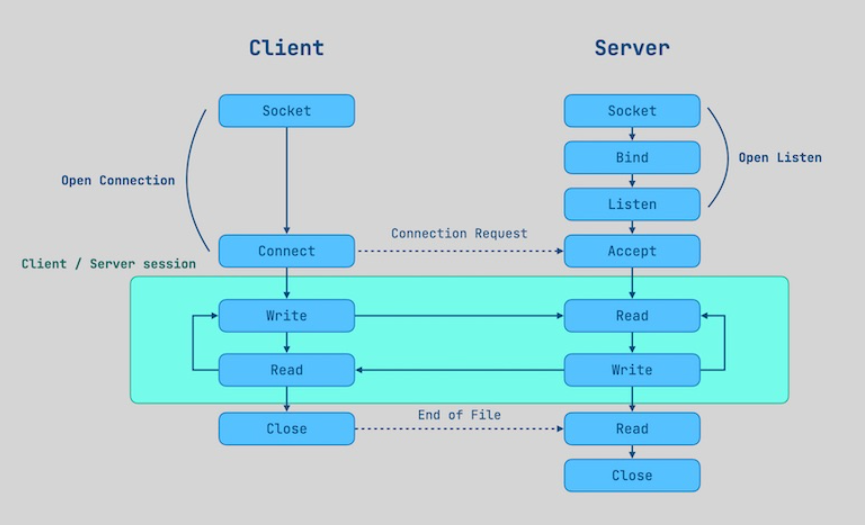
想自己動手做可以參考以下範例程式碼:
1
2
3
4
5
6
7
8
9
10
11
12
13
14
15
16
17
18
19
20
21
22
23
24
25
26
27
28
29
30
31
32
33
34
35
36
| public class Main {
public static void main(String[] args) {
int serverPort = 5001;
ServerSocket serverSocket = null;
int receiveMsgSize = 0;
byte[] receiveBuffer = new byte[32];
try {
serverSocket = new ServerSocket(serverPort);
while (true) {
System.out.println("服務已經啟動,port: " + serverPort);
Socket clientSocket = serverSocket.accept();
SocketAddress clientAddress = clientSocket.getRemoteSocketAddress();
System.out.println("收到客戶端連線, ip: " + clientAddress);
InputStream in = clientSocket.getInputStream();
OutputStream out = clientSocket.getOutputStream();
while((receiveMsgSize = in.read(receiveBuffer)) != -1) {
out.write("伺服器回應: ".getBytes());
out.write(receiveBuffer, 0, receiveMsgSize);
}
clientSocket.close();
}
} catch (IOException e) {
e.printStackTrace();
}
}
}
|
SpringBoot Validation
1
2
3
4
| <dependency>
<groupId>org.springframework.boot</groupId>
<artifactId>spring-boot-starter-validation</artifactId>
</dependency>
|
在ObjectMapper進行序列化轉換時,有些方便工具
1
2
3
4
| <dependency>
<groupId>org.springframework.boot</groupId>
<artifactId>spring-boot-starter-validation</artifactId>
</dependency>
|
1
2
3
4
5
6
7
8
9
10
11
12
13
14
15
16
17
18
19
20
21
22
23
| @NotEmpty(message = "Product name is undefined.")
private String name;
@JsonProperty("telephone")
private String tel;
@JsonIgnore
private String isbn;
@JsonUnwrapped
private Publisher publisher;
@PostConstruct
public void init() {
System.out.println("開始載入");
}
@PreDestroy
public void init() {
System.out.println("完成,將銷毀");
}
|
Spring Filter
有時我們的SpringBoot應用程式會想要對API進入口之前做一些前處理,這時候不僅可以考慮Spring AOP,也可以使用Filter,以下是實現的程式碼
1
2
3
4
5
6
7
8
9
10
11
| public class LogProcessTimeFilter extends OncePerRequestFilter {
@Override
protected void doFilterInternal(HttpServletRequest request, HttpServletResponse response, FilterChain chain) throws ServletException, IOException {
long startTime = System.currentTimeMillis();
chain.doFilter(request, response);
long processTime = System.currentTimeMillis() - startTime;
System.out.println(processTime + " ms");
}
}
|
實作完 Filter 的程式後,需要向 Spring 註冊,才會建立它的元件。
1
2
3
4
5
6
7
8
9
10
11
12
13
14
| @Configuration
public class FilterConfig {
@Bean
public FilterRegistrationBean logProcessTimeFilter() {
FilterRegistrationBean<LogProcessTimeFilter> bean = new FilterRegistrationBean<>();
bean.setFilter(new LogProcessTimeFilter());
bean.addUrlPatterns("/*");
bean.setName("logProcessTimeFilter");
return bean;
}
}
|
FilterRegistrationBean 是 Spring 提供的工具,用於註冊 Filter 並配置其屬性:
- setFilter():設置具體的 Filter。
- addUrlPatterns():指定哪些路徑會被該 Filter 攔截。
- setOrder():設置該 Filter 的執行順序(可選)多filter時用來排序處理。
Spring Exception處理
當你的API報錯回復你的自定義Exception時,可以為它加入指定的錯誤代碼
1
2
3
4
5
6
| @ResponseStatus(HttpStatus.NOT_FOUND)
public class ItemNotFoundException extends RuntimeException {
public ItemNotFoundException(String message) {
super(message);
}
}
|
為你的自定義Exception捕捉異常並處理回傳
1
2
3
4
5
6
7
8
9
| @ExceptionHandler(OperateAbsentItemsException.class)
public ResponseEntity<ExceptionResponse> handleOperateAbsentItem(OperateAbsentItemsException e) {
Map<String, Object> info = Map.of("itemIds", e.getItemIds());
var res = new ExceptionResponse();
res.setType(BusinessExceptionType.OPERATE_ABSENT_ITEM);
res.setInfo(info);
return ResponseEntity.unprocessableEntity().body(res);
}
|
另外還可以使用Global的Exception處理Annotation
1
2
3
4
5
6
7
8
9
10
11
12
13
14
15
16
17
18
19
20
21
22
23
24
25
26
27
28
29
30
31
32
33
34
35
36
37
38
39
40
41
| @RestControllerAdvice(assignableTypes = {ProductController.class, UserController.class})
public class GeneralAdvice {
private final CustomDateEditor customDateEditor = new CustomDateEditor(CommonUtil.sdf, true);
private final ToSearchTextEditor toSearchTextEditor = new ToSearchTextEditor();
@ExceptionHandler(OperateAbsentItemsException.class)
public ResponseEntity<ExceptionResponse> handleOperateAbsentItem(OperateAbsentItemsException e) {
Map<String, Object> info = Map.of("itemIds", e.getItemIds());
var res = new ExceptionResponse();
res.setType(BusinessExceptionType.OPERATE_ABSENT_ITEM);
res.setInfo(info);
return ResponseEntity.unprocessableEntity().body(res);
}
@InitBinder({"createdFrom", "createdTo"})
public void bindDate(WebDataBinder binder) {
binder.registerCustomEditor(Date.class, customDateEditor);
}
@InitBinder({"name", "email"})
public void bindSearchText(WebDataBinder binder) {
binder.registerCustomEditor(String.class, toSearchTextEditor);
}
}
public class ToSearchTextEditor extends PropertyEditorSupport {
@Override
public void setAsText(String text) throws IllegalArgumentException {
var t = CommonUtil.toSearchText(text);
super.setValue(t);
}
}
public static String toSearchText(String s) {
return Optional.ofNullable(s)
.map(String::trim)
.map(String::toLowerCase)
.orElse("");
}
|
SpringMVC @ModelAttribute
- 用來Controller上,執行home()前先執行top()把資料放到model中
1
2
3
4
5
6
7
8
9
| @ModelAttribute("top")
public Map top() {
return pageTop.getDataMap();
}
@ReqeustMapping("/")
public String home(@Reqeust(require=true) Map<String,Object> params,Model model) {
model.addAttriute("model",dataAssembly.homePageData(params));
return "home";
}
|
- 用來方法的參數中,這種用法會將 Model 中 key 為 “top” 的值注入到這個參數中
1
2
3
4
5
6
7
8
9
10
| @ModelAttribute("top")
public Map<String, Object> top() {
return pageTop.getDataMap();
}
@ReqeustMapping("/")
public String home(@ModelAttribute("top") Map top,Model model) {
JsonArray js = JSONArray.fromObject(map);
return "test";
}
|
Java Stream vs ParallelStream
Java Stream執行是串行的,但ParallelStream是並行的,也就是多執行緒。
Stream是對集合資料類型是順序執行的,但ParallelStream則是隨機執行的
比方說以下程式碼:
1
2
3
4
5
6
7
8
9
10
11
12
13
14
15
| List<Integer> integerList = Lists.newArrayList();
List<String> strList = Lists.newArrayList();
int practicalSize = 1000000;
for (int i = 0; i < practicalSize; i++) {
strList.add(String.valueOf(i));
}
strList.parallelStream().forEach(each -> {
integerList.add(Integer.parseInt(each));
});
System.out.println(strList.size());
System.out.println(integerList.size());
|
應該要把資料型態改用SychronizeList或是Vector來處理多執行緒問題。
使用ParallelStream應該要考慮
- 是否真正需要並行?
- Task是否彼此獨立不受影響?
- 是否有順序執行需求?
副作用(Side Effect) 是什麼?
在操作物件當中,無意間改變了物件的值或是型別。
記憶體洩漏(Memory Leak) 是什麼?
- 當一個程式被編譯成bytecode,在框架下運行的話,框架可以協助自動處理momery allocation, security, exception, GC等問題。
- 若沒有框架處理,就必須要手動處理這些問題,沒有把取用的記憶體全部釋放就會導致Memory leak。
- 一般程式來說,只要process結束後記憶體就會被虛擬機(JVM)全部釋放,不會有這個問題。
- C/C++ 因為沒有GC,所以經常出現。另外像是EventListener() 只移除了裡面的元素卻沒有移除Listener()也會造成。另外還有循環引用與存取全域變數。
循環引用 (Circular Import)
物件A參照到B,B又參照到A,就會造成循環引用,會造成記憶體洩漏,同時GC也會無法正常運行(Java除外)。
不時更新…